In a world that runs on clicks, convenience, and next-day delivery, fashion has become faster than ever — and so has its impact.
The fast fashion model, built on rapid production and low prices, has revolutionized consumer behavior. But behind the racks of trendy, affordable garments lies a troubling truth: our closets are overflowing, while our planet is paying the price.
Overconsumption: When Style Becomes Waste
Let’s face it — we buy more than we wear. The average consumer now purchases 60% more clothing than they did 15 years ago but keeps each item for only half as long. Most of these items aren’t recycled, donated, or reused. They’re tossed. And globally, an estimated 92 million tons of textile waste ends up in landfills each year. That’s the equivalent of a garbage truck full of clothes being dumped every second.
Worse still, many of these garments are made of synthetic fibers like polyester, which can take up to 200 years to decompose.
Microplastics: The Unseen Pollution
It’s not just about overflowing landfills. Every time you wash synthetic clothing, tiny plastic particles — known as microplastics — are released into our water systems. These microplastics are too small to be filtered and eventually end up in rivers, oceans, and even our drinking water.
A single load of laundry can release up to 700,000 microplastic fibers. These particles are now found everywhere — from Arctic snow to deep-sea fish — infiltrating ecosystems and entering the food chain. It’s pollution we can’t see, but that doesn’t make it any less dangerous.

The Textile Industry’s Heavy Footprint
The fashion industry is responsible for up to 10% of global carbon emissions — more than all international flights and maritime shipping combined. Dyeing and finishing textiles also contribute to 20% of global industrial water pollution.
On the ground level, factories often operate in developing countries where environmental regulations are lax, leading to toxic runoff, contaminated water sources, and health risks for local communities.
It’s Time for a System Shift — Not Just a Wardrobe Change
We don’t just need more sustainable clothes. We need a more sustainable mindset.
- Buy less, choose better: Support brands that invest in quality, transparency, and ethical practices.
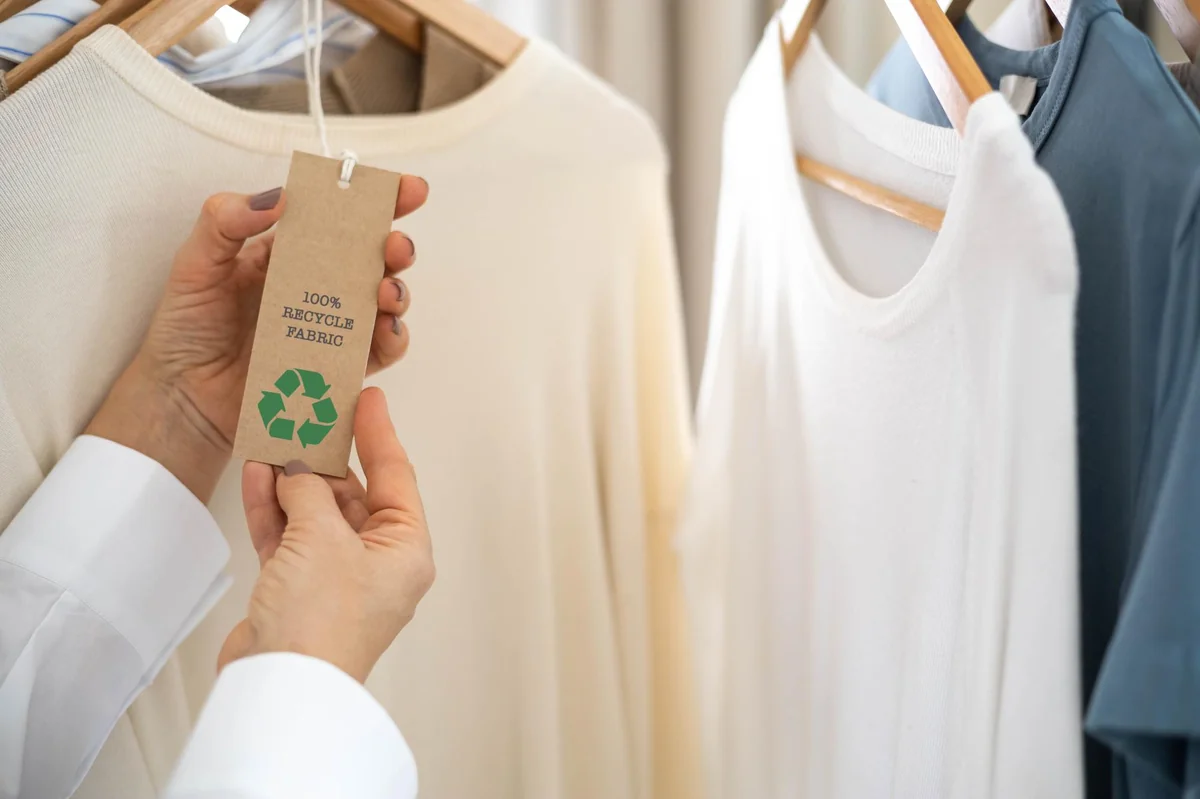
- Embrace circularity: Repair, repurpose, and recycle clothing whenever possible.
- Question the trend cycle: Fashion shouldn’t be disposable. Trends come and go, but the planet doesn’t.
As consumers, we have more power than we think. Every purchase is a vote — not just for style, but for the kind of future we want to live in.
The era of mindless consumption is coming to an end. The next wave of fashion must be slower, smarter, and truly sustainable.
Let’s start with asking a simple question: Who really pays the price for a $5 T-shirt?